How Innocent Are You, Really?
Think you're one of the good ones? Ten questions stand between you and the truth. Your answers will place you somewhere on a spectrum that's wider than you think.
About this quiz
Somewhere between the person who reports a supermarket scanner error out of pure principle and the one who lingers three seconds too long on a stranger's unlocked phone, most of humanity exists. That gap is exactly what this innocence test was built to measure. Not a moral trial, not a verdict from on high, but a precise reading of where you actually land on a spectrum far wider than anyone admits over dinner. So, how innocent are you, really? Sit with that question before you answer it out loud. Most people answer instantly, confidently, and almost certainly wrong. Self-perception and actual behavior rarely line up cleanly, which is exactly why a proper how innocent are you quiz beats a mirror every time. Ten short scenarios, each small enough to feel harmless, specific enough to expose something real about your moral compass.
What Does an Innocence Test Actually Reveal?
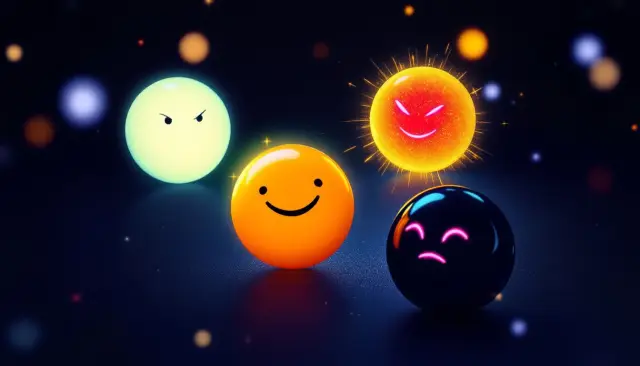
Forget the binary of good and bad. What holds up under scrutiny is something more granular, four distinct temperaments this quiz sorts you into. The Pure Soul follows rules because they make sense, not for show. The Soft Rebel keeps a functional sense of right and wrong alongside a small, curated drawer of quiet exceptions. The Knowing Smiler made peace with reality long ago and operates with calm efficiency. The Certified Chaos Agent treats purity less as a trait and more as a rumor about someone else, from another decade, in another city. Figuring out which one describes you isn't about confession, it's about noticing your own reflexes. The locked drawer at a party you'd definitely peek into, or definitely wouldn't. The unnamed pastry in the break room with someone else's name taped to it. The haircut you're asked to compliment when you genuinely can't. None of these moments are dramatic, that's exactly the point. Character rarely shows up in the big scenes, it leaks out in the small, unwatched ones, which is the territory this quiz quietly explores.
How to Know If You're Actually Innocent
The real question isn't whether you've ever crossed a line, everyone has, somewhere, quietly. It's what happens next. Does guilt show up uninvited and linger for days, or does it arrive, get acknowledged, and leave just as fast? Or does it simply never RSVP? The Soft Rebel replaces what they took without being asked. The Knowing Smiler confesses smoothly, almost gracefully, the moment it becomes relevant. The Certified Chaos Agent would probably do it again. This is where the questions get interesting rather than accusatory. The group chat lighting up with a rumor about someone you barely know. The shortcut on a group project nobody would notice. The cover story for a friend skipping a family dinner to meet someone new. Each scenario is a window into a bigger pattern, the kind you've been living inside for years without naming it.
Self-knowledge has a reputation for being earnest and slightly dull, but calibrated this precisely, it becomes genuinely fun. You start clocking the habitual white lie you've always called tact, the boundary you've bent so often it stopped feeling like bending, the exact moment your moral compass quietly recalibrates without asking permission. Ten questions, a couple of minutes, and an honest answer to whether you're more innocent than your reputation suggests, or considerably less. Either way, only one thing is certain, you're about to find out how innocent you really are. Ready to see which of the four profiles this personality quiz has been saving for you all along?
Frequently asked questions
How long does the How Innocent Are You, Really? quiz take?
About 4 minutes, no signup required.
Is the How Innocent Are You, Really? quiz free?
Yes. Every quiz on Quizzvibes is free and playable instantly.
Can I play the How Innocent Are You, Really? quiz with friends or as a couple?
Yes, three ways: as a challenge, your friends answer as you and the score shows who really knows you; as a couple, you each answer on your own and the quiz measures your compatibility; with friends, everyone gets their profile and one verdict for the group. Free, no signup.
What does the How Innocent Are You, Really? quiz reveal?
Think you're one of the good ones? Ten questions stand between you and the truth. Your answers will place you somewhere on a spectrum that's wider than you think.